How to Build an Emergency Fund in Canada (And Where to Keep It)
Most Canadians are one unexpected expense away from financial stress. A job loss, car repair, medical bill, or broken appliance can derail even the best budget — unless you have an emergency fund sitting ready. Building one isn’t complicated, but most people put it off longer than they should.
In this guide we’ll cover exactly how much you need, how to build your emergency fund quickly even on a tight budget, and — crucially — where to keep it so it’s safe, accessible, and actually earning something while it sits there.
What Is an Emergency Fund?
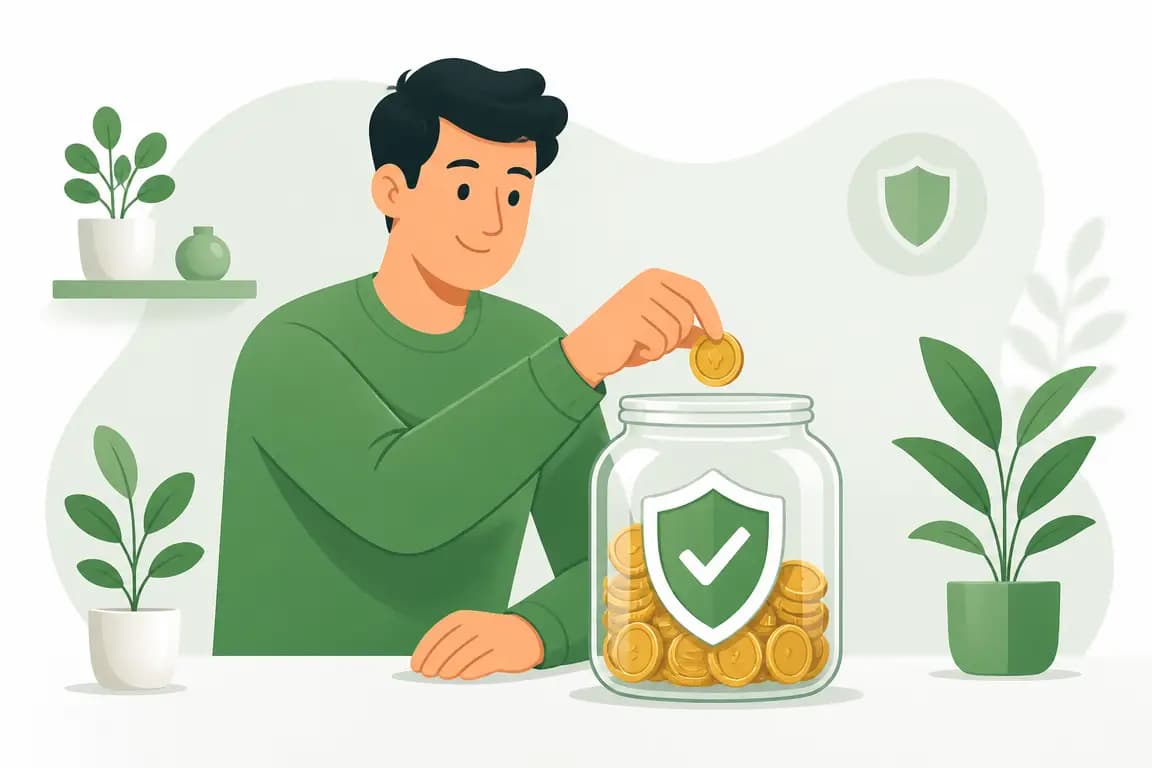
An emergency fund is a dedicated pool of cash set aside exclusively for unplanned, unavoidable expenses. It’s not a vacation fund, a down payment fund, or a “treat yourself” fund. It exists for one purpose: to keep your life running smoothly when something goes wrong.
Done right, an emergency fund means you never have to reach for a credit card at 20% interest when life surprises you. It means you can take time to find the right job after a layoff instead of panicking and taking the first offer. It’s the financial equivalent of a seatbelt — you hope you never need it, but you’d never drive without one.
How Much Should You Save?
The standard advice is three to six months of living expenses. But the right number depends on your situation:

- 3 months — suitable if you have a stable job, a dual-income household, and low fixed expenses.
- 6 months — better if you’re self-employed, work contract or seasonal work, have dependents, or work in a volatile industry.
- 9–12 months — worth considering if you’re a sole income earner with a mortgage, or in a niche field where finding new work takes time.
To calculate your target, add up your essential monthly expenses: rent or mortgage, groceries, utilities, insurance, minimum debt payments, and transportation. Multiply by your target number of months. That’s your number. For the average Canadian household spending around $3,500/month on essentials, a three-month fund is $10,500 and a six-month fund is $21,000.
Start Small: The $1,000 Starter Fund
If a full three-to-six month fund feels out of reach right now, start with a smaller goal: $1,000. This covers most common emergencies — a car repair, a dental bill, a flight home for a family situation. Getting to $1,000 as fast as possible dramatically reduces the chance you’ll need to go into debt when something comes up.
Once you hit $1,000, keep building. Even an extra $100 or $200 a month will get you to a full three-month fund within a year or two without significantly disrupting your life.
How to Build Your Emergency Fund Faster
Automate It
The most effective strategy is to automate a transfer to your emergency fund on payday — before you have a chance to spend it. Even $50 or $100 per pay period adds up quickly and removes the willpower required to save consistently. Most Canadians find that once the transfer is automatic, they barely notice it.
Use Windfalls Wisely
Tax refunds, work bonuses, birthday money, and side hustle income are all opportunities to make a large dent in your emergency fund goal. Committing even half of any windfall directly to your fund can shave months off your timeline.
Trim One Recurring Expense
You don’t need to overhaul your entire budget. Identify one subscription, one habit, or one recurring cost you can reduce or eliminate temporarily and redirect that money to savings. Cancelling a $25/month streaming service you barely use adds $300 to your fund over a year.
Sell What You Don’t Use
Most Canadian households have hundreds — sometimes thousands — of dollars worth of unused items sitting in closets and garages. A weekend of listing things on Facebook Marketplace or Kijiji can produce a meaningful one-time boost to your starter fund.
Where Should You Keep Your Emergency Fund in Canada?
This is where most people go wrong. Your emergency fund needs to be instantly accessible and needs to earn something while it sits there. Keeping it in a chequing account that earns nothing means inflation quietly erodes its value. Investing it in the stock market means it could drop 20% right when you need it most.
The sweet spot is a high-interest savings account (HISA) — and one of the best options available to Canadians right now is Wealthsimple Cash.

Why Wealthsimple Cash Works Well for an Emergency Fund
Wealthsimple Cash is a hybrid spending and savings account that offers a competitive interest rate with no monthly fees and no minimum balance. Your money is accessible immediately — you can transfer it out or spend it with the included Visa card whenever you need it. There are no lock-in periods, no penalties for withdrawals, and no hoops to jump through.
It also integrates seamlessly with Wealthsimple’s investing products, so as your financial life grows — from emergency fund to TFSA to RRSP — everything lives in one app. That simplicity is genuinely underrated when it comes to staying on top of your finances long-term.
If you haven’t opened a Wealthsimple account yet, now is a great time. New users who sign up with referral code US0EBW and deposit $100 receive a $25 cash bonus — which you could put straight into your emergency fund as a head start.
Should You Keep Your Emergency Fund in a TFSA?
Yes — and many financial advisors recommend it. Keeping your emergency fund inside a TFSA means any interest it earns is completely tax-free. Since a HISA inside a TFSA still gives you full access to your money at any time, there’s no real downside.
The one thing to be mindful of: when you withdraw from a TFSA, that contribution room isn’t restored until January 1 of the following year. So if you use your emergency fund and drain your TFSA, you won’t be able to re-contribute until the new year. This isn’t a dealbreaker — it’s just worth understanding.
Wealthsimple lets you open both a Cash account and a TFSA in the same app, making it easy to keep your emergency fund in a TFSA-sheltered HISA and your long-term investments in a separate account.
Common Emergency Fund Mistakes to Avoid
- Keeping it in your everyday chequing account. Too easy to accidentally spend. Keep it separate so there’s a small psychological barrier between you and the money.
- Investing it in stocks or ETFs. Markets can drop significantly right when life gets hard. Emergency funds are for protection, not growth.
- Raiding it for non-emergencies. A sale on flights or a new sofa is not an emergency. Define in advance what qualifies, and stick to it.
- Not replenishing it after use. If you dip into your emergency fund, make rebuilding it your top financial priority until it’s back to your target.
- Waiting until you “have more money” to start. Even $25 a week is $1,300 in a year. Start now, start small, and build from there.
Emergency Fund vs. Paying Off Debt: Which Comes First?
This is one of the most common personal finance dilemmas. The general approach that works well for most Canadians:
- Build a $1,000 starter emergency fund first.
- Then aggressively pay down high-interest debt (credit cards, payday loans).
- Then build your full three-to-six month emergency fund.
- Then focus on longer-term goals like TFSA investing and retirement.
The reason for the $1,000 starter fund first: without any buffer at all, the first unexpected expense sends you straight back to the credit card, undoing your debt payoff progress. A small fund breaks that cycle.
The Bottom Line
An emergency fund isn’t exciting. It won’t make you rich and it won’t show impressive returns. But it is the single most important financial safety net you can build — and for most Canadians, it’s the difference between a bad month and a financial crisis.
Start with $1,000. Automate your contributions. Keep it somewhere safe and accessible like Wealthsimple Cash. And if you’re just getting started, use referral code US0EBW when you open your account to get a $25 cash bonus deposited — a small but satisfying way to kick things off.
Disclaimer: This post contains referral links. We may earn a commission if you sign up through our link, at no extra cost to you. This content is for informational purposes only and does not constitute financial advice. Always consult a qualified financial advisor for guidance specific to your situation.